
3D Crystal vs Canvas Print: Which Photo Gift Is Right for You?
Both a 3D photo crystal and a canvas print turn a cherished photo into a display piece — but they do it in fundamentally different ways, and the right choice depends on who you're buying for and what you want the gift to say. This guide gives you the honest comparison so you can choose with confidence.
What Is a 3D Photo Crystal?
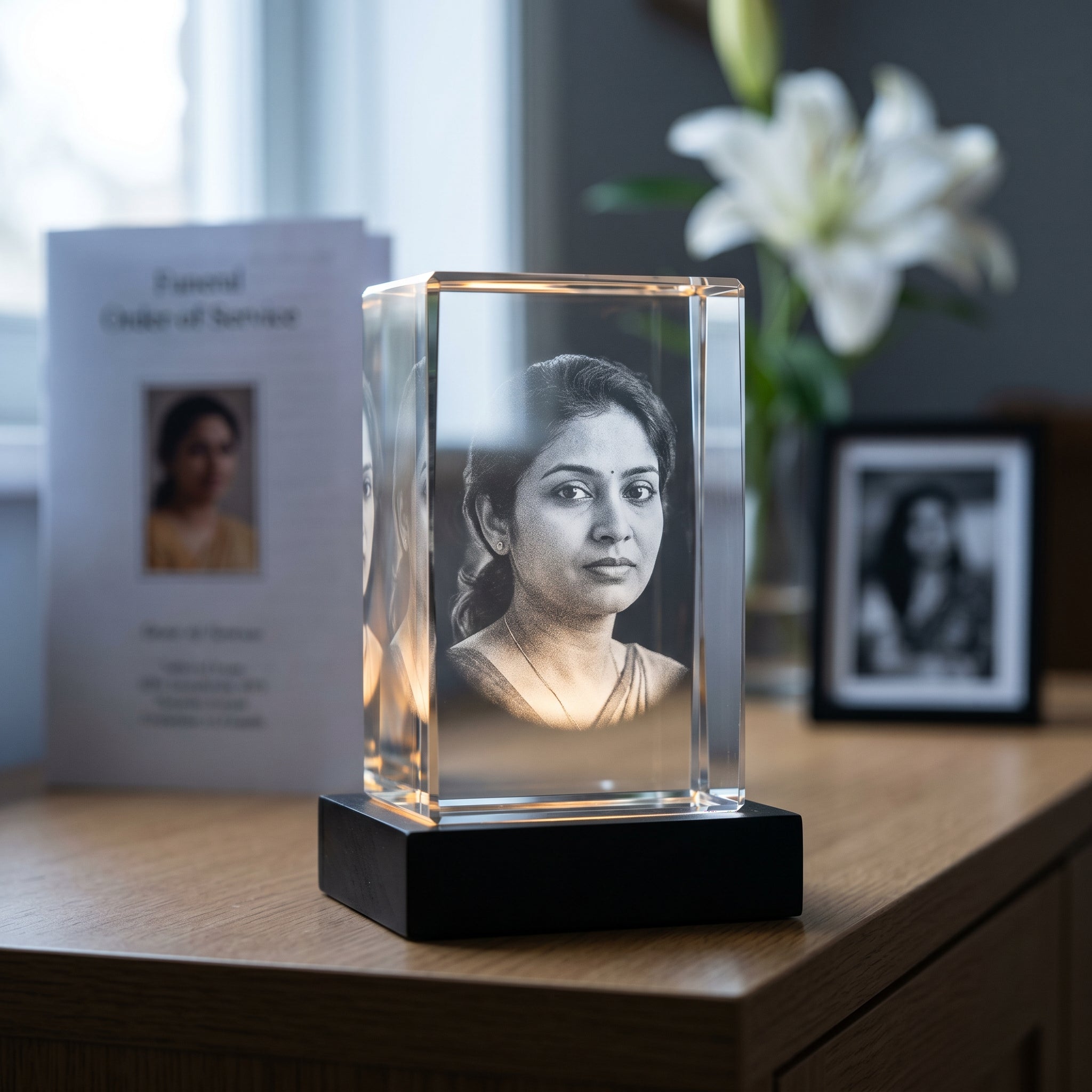
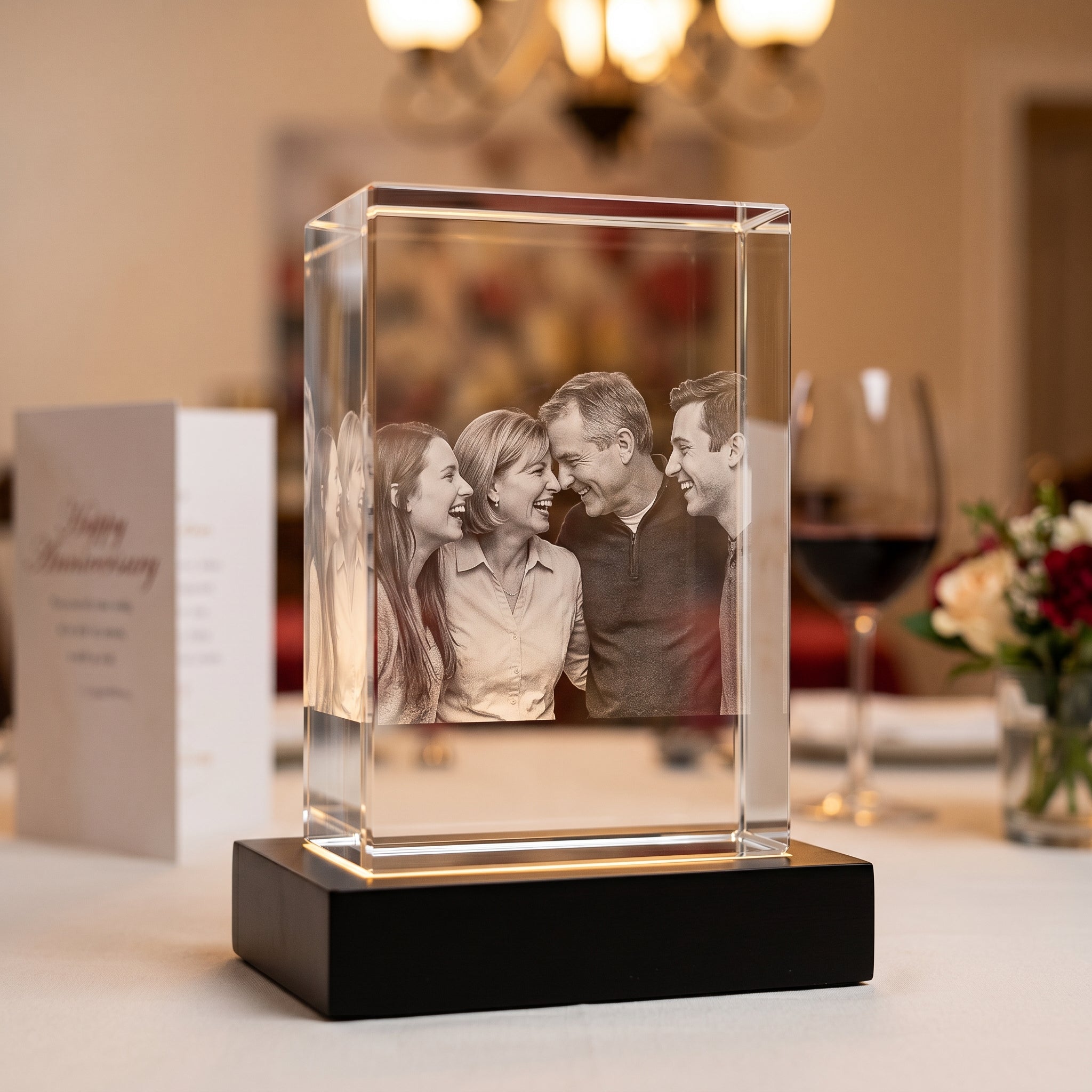
A 3D photo crystal uses subsurface laser engraving to render a photograph inside a block of optical-grade crystal. The image floats inside the glass in three dimensions — visible from multiple angles — in continuous-tone grayscale. The crystal itself is heavy, solid, and typically displayed on a desk, shelf, or mantle, optionally with an LED base that illuminates it from below.
The result is something that feels more like a sculpted object than a photograph — it catches light, it holds your attention, and it has a weight and permanence that no printed media can match.
What Is a Canvas Print?
A canvas print transfers a photograph onto canvas fabric and stretches it over a wooden frame. The result is a wall-mounted piece that looks like an oil painting in texture, with the photograph printed full-color (or in black and white). Canvas prints are gallery-wrapped, meaning the image continues around the edges, and are available in a wide range of sizes.
3D Crystal vs Canvas Print: The Comparison
Visual Impact
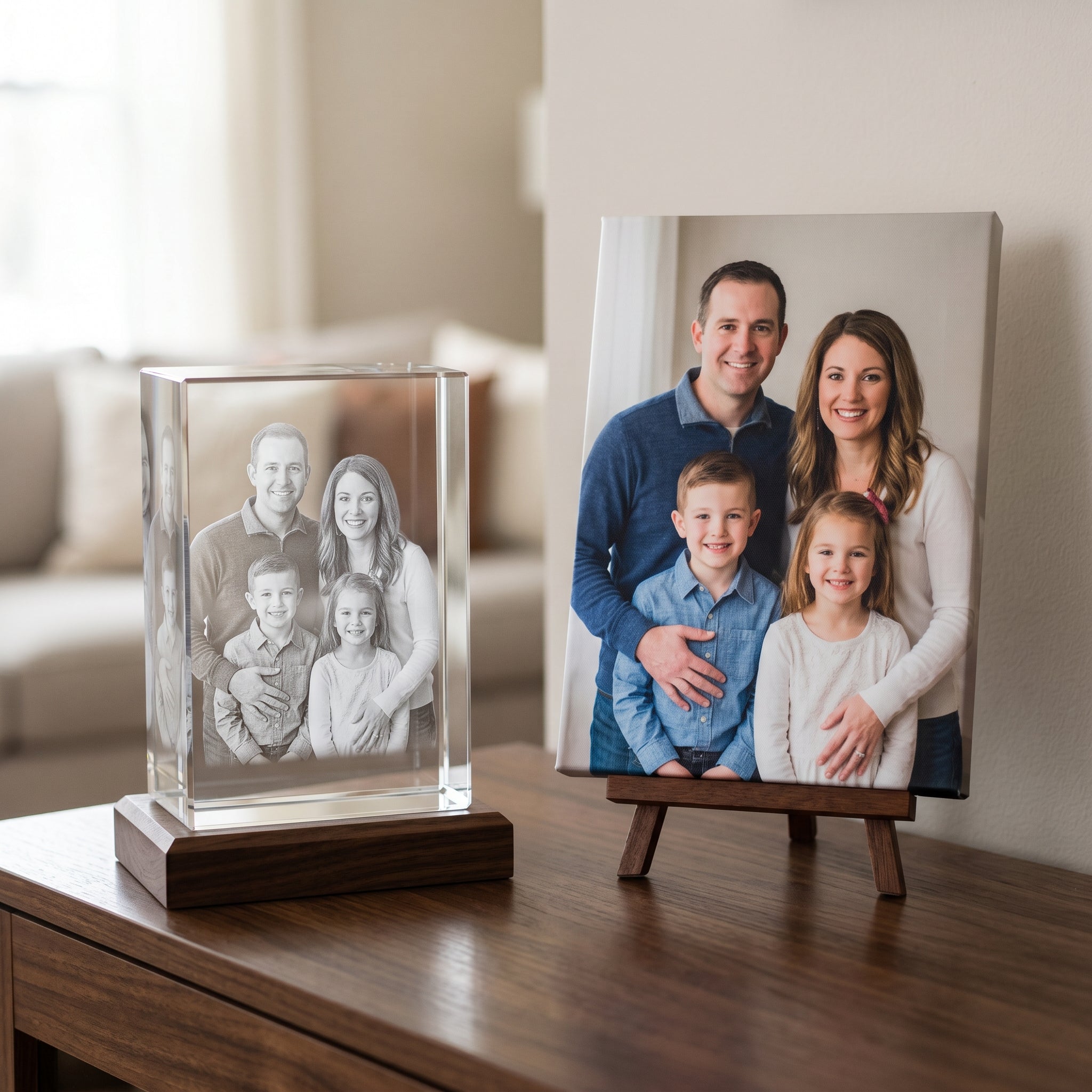
Crystal: High visual impact in a concentrated area. The image appears to float inside a solid object, which creates a striking effect when light hits it. More impressive up close than from across a room. The grayscale rendering adds a timeless, artistic quality.
Canvas: High visual impact from a distance. A large canvas dominates a wall effectively and showcases color photography beautifully. More versatile for full-color images or large-scale scenes.
Winner for intimacy: Crystal. Winner for scale: Canvas.
Longevity and Durability
Crystal: Optical-grade crystal doesn't fade, doesn't yellow, doesn't react to humidity or temperature changes. The image inside is engraved, not printed, so it cannot deteriorate. A quality crystal will look identical in 50 years as it does today. The main risk is breakage from dropping.
Canvas: Canvas prints can fade over time, particularly in direct sunlight or high-humidity environments. UV-protective coatings extend their life significantly, but they remain a printed product subject to the same aging processes as any print. A well-cared-for canvas can last decades; an exposed one may show degradation in 10-15 years.
Winner: Crystal (significantly more permanent).
Display Flexibility
Crystal: Designed for tabletop, shelf, or mantle display. Not wall-mounted without specialized hardware. Works well on a desk, a nightstand, a coffee table, or alongside other display objects. Multiple sizes available, from small desk pieces to large statement sizes.
Canvas: Designed for wall mounting. Can be hung in any room and at any height. More flexible for interior design integration — it's essentially a piece of wall art that happens to feature a photo.
Winner for walls: Canvas. Winner for surfaces: Crystal.
Color vs Grayscale
Crystal: Produces grayscale (black and white) images. Color crystals exist but are significantly less defined and don't match the sharpness of grayscale engraving. If color is important to the image, crystal may not be the right choice.
Canvas: Full color. Ideal for landscapes, colorful portraits, images where the color is central to the photo's meaning.
Winner for color: Canvas. Winner for timeless aesthetic: Crystal.
Gift Perception
Crystal: Perceived as more unique, higher-end, and more specifically meaningful. Recipients often describe it as unlike anything they've received before. The weight, the glow, the three-dimensional quality make it feel like a genuine keepsake rather than wall decoration.
Canvas: Perceived as a high-quality decorative item. Well-received as a gift, but more familiar — many people have given or received canvas prints. Less likely to produce the emotional impact of a crystal.
Winner for gift impact: Crystal.
Price
Canvas prints are generally less expensive for comparable sizes. A quality 3D crystal runs $50-200+ depending on size; a comparable canvas print is often $30-100. The crystal's significantly higher longevity and gift impact typically justify the price difference for a meaningful gift occasion.
Winner for budget: Canvas. Winner for value: Crystal (for the right occasion).
Which Should You Choose?
Choose a 3D photo crystal if:
- You want a gift that feels genuinely unique and memorable
- You're giving it for a significant occasion (anniversary, memorial, milestone birthday)
- The recipient will display it on a surface rather than a wall
- You want the gift to last permanently without any degradation
- The emotional impact of the gift matters more than matching a specific room's decor
Choose a canvas print if:
- The photo's color is central to its meaning and must be preserved
- You need a wall piece for a specific room and size
- You're working with a tighter budget
- The recipient prefers wall art over tabletop objects
- You want a large-scale display piece (3 feet or wider)
Why Trust Beyond Memories
Beyond Memories has been featured by USA Today as a trusted source for photo gifts. Our 3D crystals use precision subsurface laser engraving in optical-grade crystal, with quality and permanence that canvas printing cannot match for keepsake occasions. Thousands of customers have chosen Beyond Memories for anniversaries, memorials, birthdays, and milestone gifts.
Frequently Asked Questions
Is a 3D crystal worth it over a canvas print?
For a meaningful gift occasion — an anniversary, a memorial, a milestone birthday — yes. A 3D crystal has significantly higher gift impact, lasts indefinitely without fading, and produces an emotional response that canvas prints rarely match. For everyday wall decor or budget-conscious gifts, canvas is the practical choice.
Can a 3D crystal show color?
The standard 3D crystal uses grayscale (black and white) engraving, which produces the sharpest, most detailed portraits. Color crystal technology exists but produces notably less definition than grayscale. If preserving the color of a photo is important, a canvas print is the better choice.
How long does a 3D crystal last compared to canvas?
A quality 3D crystal essentially lasts forever — the engraved image inside optical glass doesn't fade, yellow, or degrade. A canvas print can last 15-25+ years with proper care and UV protection, but will eventually show some degradation, particularly in direct sunlight. For a permanent keepsake that needs to look perfect in 50 years, crystal wins decisively.
Ready to order? Explore all photo gift ideas from Beyond Memories, or see how we compare to other crystal providers.