
3D Crystal vs Metal Print: Which Photo Display is Worth Your Money?
Both 3D photo crystals and metal prints are premium photo display formats — a significant step above canvas and framed prints in perceived quality and visual impact. But they're fundamentally different in how they work, how they're displayed, and what they communicate as a gift. This guide gives you the honest comparison.
What Is a 3D Photo Crystal?
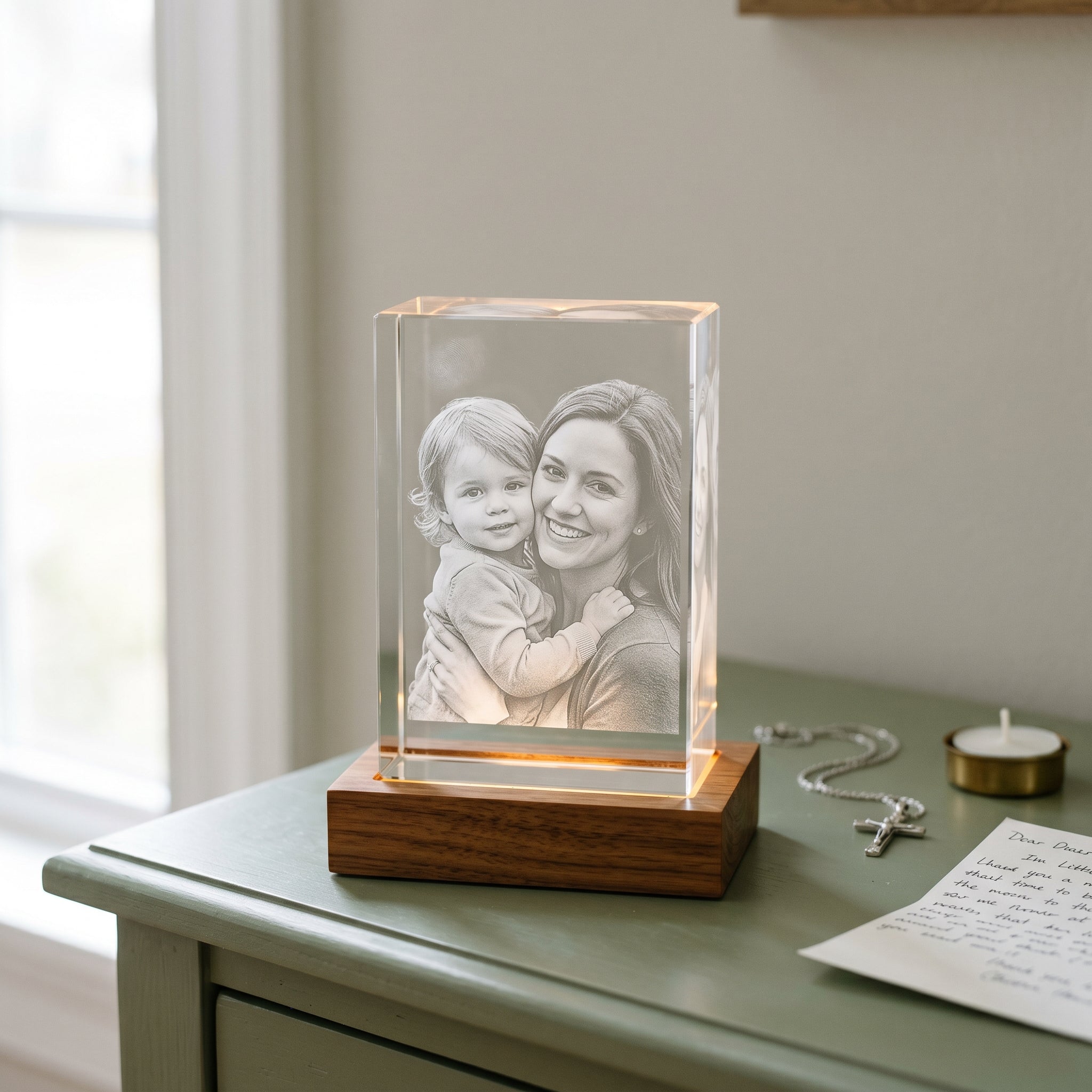
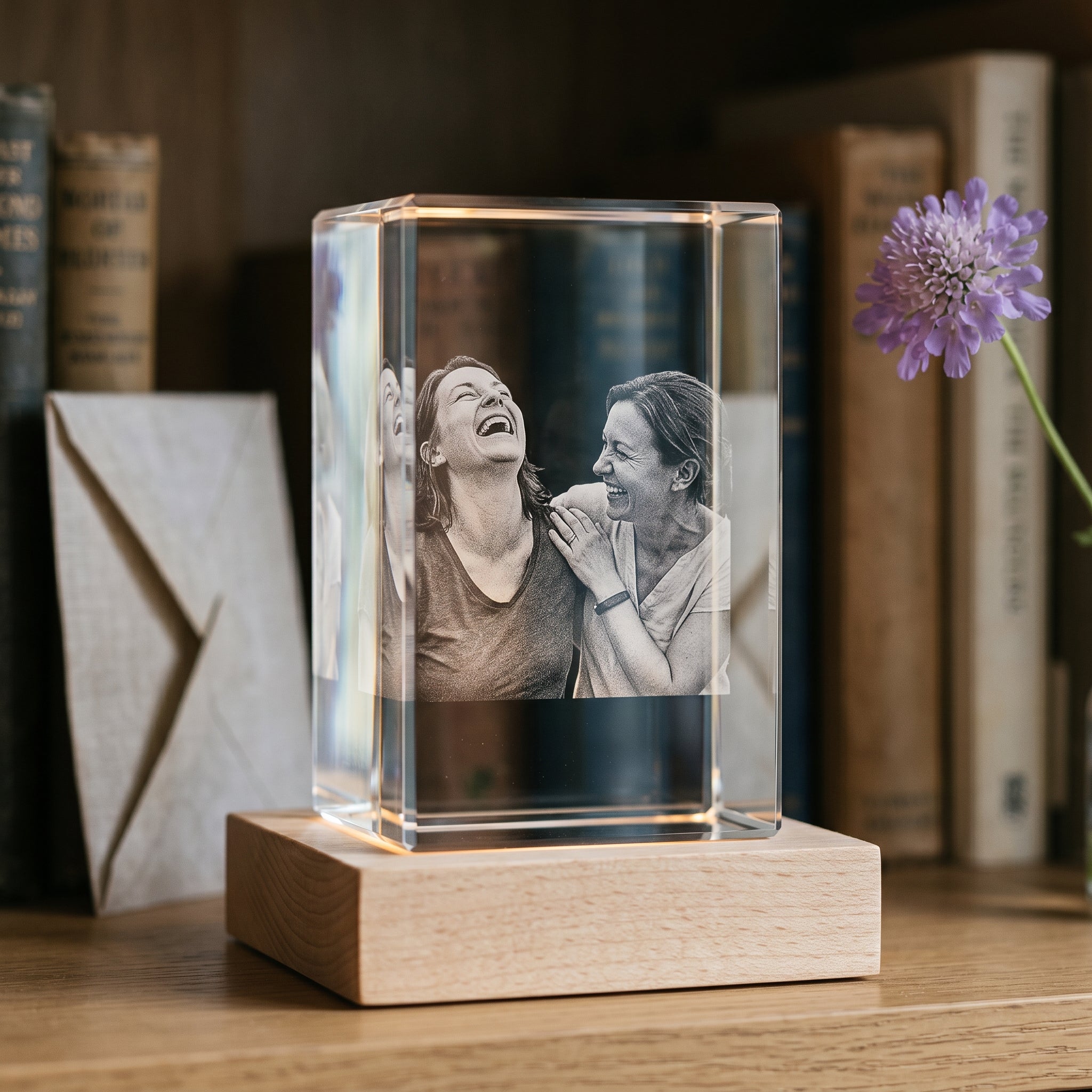
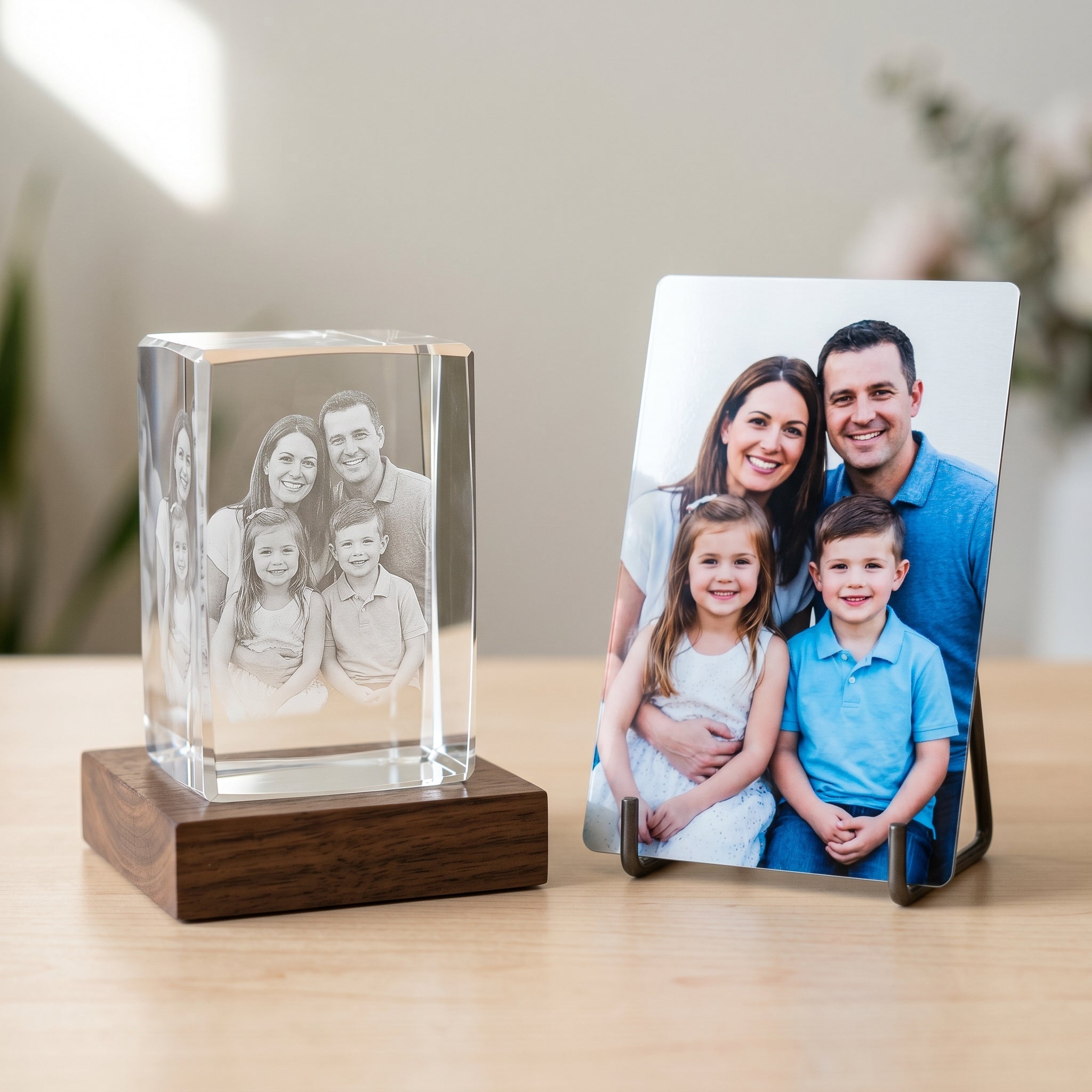
A 3D photo crystal uses subsurface laser engraving to place a photograph inside a solid block of optical-grade glass crystal. The image appears in three dimensions, floating inside the crystal, visible from multiple angles, in continuous-tone grayscale. The crystal itself is a solid, heavy object — typically displayed on a desk, shelf, or mantle, with or without an LED base that illuminates it from below.
What Is a Metal Print?
A metal print infuses photographic dye directly into the surface of aluminum using a heat-transfer process. The result is a vivid, high-contrast wall-mounted display piece with a metallic sheen and no frame or glass required. Colors appear luminous and saturated. The print floats off the wall on a backing mount, giving it a modern, gallery-like appearance.
The Head-to-Head Comparison
Visual Impact
Crystal: Dramatic up close. The three-dimensional, floating image inside a clear solid object creates a visual effect unlike any other display format. Grayscale rendering adds artistic depth. The crystal changes in appearance as lighting conditions change — catching light from different angles throughout the day.
Metal print: Dramatic from a distance. The vivid colors and metallic sheen of a metal print create stunning wall presence, especially for bold, graphic photography. Colors appear more saturated and luminous than on canvas or paper.
Winner for intimacy and uniqueness: Crystal. Winner for bold wall presence: Metal print.
Color vs Grayscale
Crystal: Standard 3D crystals render in grayscale, which suits portrait photography exceptionally well and gives a timeless, artistic quality. Color crystals exist but are notably less sharp.
Metal print: Full color, with exceptional color saturation and contrast. Landscapes, colorful portraits, and graphic images shine on metal.
Winner for color images: Metal print. Winner for timeless portraiture: Crystal.
Longevity
Crystal: The engraved image inside optical glass doesn't fade, yellow, or degrade. Essentially permanent — the image will look identical in 100 years. The main risk is breakage from dropping.
Metal print: Highly durable — scratch-resistant, moisture-resistant, and less vulnerable to UV fading than canvas or paper. Quality metal prints last 25-75+ years with no special care. More durable than most alternatives, but still a printed medium that could theoretically degrade over very long periods.
Winner: Crystal (effectively indefinite longevity vs 25-75+ years for metal).
Display Flexibility
Crystal: Designed for tabletop, shelf, or mantle display. Multiple sizes available from small desk pieces to large statement pieces. Pairs beautifully with an LED base for added visual impact.
Metal print: Designed for wall mounting. Available in a very wide range of sizes — from 8x10 to very large format (4 feet+). The floating mount system creates a clean, modern wall installation.
Winner for wall art: Metal print. Winner for surface display: Crystal.
Gift Impact
Crystal: Consistently produces strong emotional responses. Recipients describe it as unlike anything they've received, often as the most meaningful photo gift they've been given. The physical weight, the three-dimensional image, the light effects — all combine to create an impression that outlasts the unwrapping moment.
Metal print: Well-received as a premium gift. More familiar than a crystal — metal prints have become increasingly common in home decor — so while they read as high-quality, they're less likely to produce the uniqueness-driven emotional impact of a crystal.
Winner for gift impact: Crystal.
Price
Both formats are premium, but metal prints span a wider price range. A quality 8x10 metal print runs $30-80; a large-format metal print can reach $200+. A 3D crystal typically runs $50-200+ depending on size. They're comparable in the middle price range; metal prints can be found less expensively at small sizes.
Winner for budget options: Metal print. Winner for value at mid-range: Crystal (for gift occasions).
Which Should You Choose?
Choose a 3D photo crystal when:
- You want the strongest possible gift impact
- The occasion is significant (anniversary, memorial, milestone birthday)
- The image is a portrait or close-up where grayscale works beautifully
- The recipient has a desk, shelf, or mantle where they'd display it
- You want the gift to last indefinitely without any degradation
Choose a metal print when:
- The photo is colorful (landscape, travel, lifestyle) and color is central to the image
- You need a wall piece and the recipient doesn't have obvious tabletop display space
- You want large-format wall art (3 feet or wider)
- The recipient's home aesthetic is modern and would suit the metallic finish
- You're shopping for home decor rather than a keepsake gift
Why Trust Beyond Memories
Beyond Memories has been featured by USA Today as a trusted source for photo gifts. Our 3D crystals use precision subsurface laser engraving in optical-grade crystal — the standard of quality for the gift occasions that matter most. Thousands of customers have chosen Beyond Memories for anniversaries, memorials, milestones, and special occasions.
Frequently Asked Questions
Is a 3D crystal or metal print better as a gift?
For most gift occasions, a 3D crystal produces stronger emotional impact. The uniqueness of the format, the three-dimensional quality, and the physical weight combine to create an impression that metal prints — however beautiful — rarely match. For a keepsake meant to mark a significant moment, crystal wins. For home decor or a colorful travel photo, metal is competitive.
Do metal prints fade over time?
Metal prints are more UV-resistant than canvas or paper, but they are still a dye-based medium that can theoretically fade over very long periods, particularly in direct sunlight. A 3D crystal — being an engraved rather than printed format — doesn't fade at all. For a permanent keepsake meant to look identical in 50 years, crystal is the better choice.
Can a 3D crystal be hung on a wall?
Standard 3D crystals are designed for tabletop, shelf, or mantle display — they're not wall-mounted. Some custom framing solutions can mount a crystal on a wall, but this isn't the standard display method. If you specifically need a wall-mounted photo display, a metal print or canvas is the more practical choice.
More comparisons: 3D crystal vs canvas print | best photo gift guide | ArtPix 3D vs Beyond Memories